Friday, April 13, 2007

Hezekiah's Family Tree

“Now it came to pass in the third year of Hoshea son of Elah king of Israel, that Hezekiah the son of Ahaz king of Judah began to reign. Twenty and five years old was he when he began to reign; and he reigned twenty and nine years in Jerusalem. His mother's name also was Abi, the daughter of Zachariah. And he did that which was right in the sight of the LORD, according to all that David his father did...He trusted in the LORD God of Israel; so that after him was none like him among all the kings of Judah, nor any that were before him. For he clave to the LORD, and departed not from following him, but kept his commandments, which the LORD commanded Moses. And the LORD was with him; and he prospered whithersoever he went forth: and he rebelled against the king of Assyria, and served him not.”

1 Kings 18:1-7

For a few weeks now I have been captivated by the above passage. Here we find Hezekiah, a son of one of the most wicked kings of Judah. Despite the wickedness of his father he has turned to the Lord and held fast. Dr. Wilbur Williams speculates that the cause for Hezekiah’s righteousness was embedded in the scarring childhood experience of likely having witnessed a brother being sacrificed to the gods. While this is more than possible we just do not know what or who made Hezekiah so sensitive to the tender whispers of God.

Perhaps what interests me more than why Hezekiah turned to the Lord is that he did and that this was a highly important fact in the eyes of the historians recording the book of Kings. It was not anything that Hezekiah built or did that elevated his status to one of greatness among the pantheon of kings. Rather, it was who he was in his relationship to God that claimed his rightful place near the top of the list of great kings.

All of this began to cause the wheels of my mind to begin to slowly begin to turn. In our own family histories we all too often lift up the Solomons and even the Ahabs as examples of virtue. Consider Solomon. Do you have a Solomon in your family? You may very well. He was a wise king. He was a wildly wealthy king. In his earliest years he was a quite faithful king. Yet as he aged he drifted form the Lord. He married many times poorly and his wives eventually led him from the Lord. Solomon had money and wisdom but ultimately forfeited his legacy for women (in a manner of speaking). Certainly there is someone in your family tree of whom you may say the same thing. Too often when we recount family histories to our children we emphasize he relative who was wealthy while ignoring the more important consideration of their faithfulness to God.

This all was driven home to me powerfully over the last Easter weekend. We had gone back home and were staying in the home of my grandparents. While looking through the library I found a book I had flipped through before; a history of the county issued in 1988. It was a history that had been compiled from the various biographies of local residents. Of course, in time I ran across the biographies of my grandparents and various other relatives, but it was the biography of a particular grandfather that struck me. Many of the other biographies highlighted personal achievements, the churches and clubs of which the person was a member, the names of their parents and children, and normally a few notes about them as a person. My grandfather’s biography, however, was different. The last sentence of his biography, submitted then by my grandmother, read something like this: “Any one who knows him knows that he loves his God and strives for perfection in all he undertakes.”

Well, we need more biographies like that (and like Hezekiah's). Most people were so concerned with listing their rotary club memberships and county fair awards that they had let a statement like this one go unmentioned. Too bad. In the end the whole situation has me considering writing a “spiritual” history for my family. I have no doubt that such a situation is likely to be complicated. How do you ask a relative about their spiritual state and experiences when you know they are not where they perhaps should be? Anyway, I’m thinking about it. If I do undertake it, it will be my summer project and will require a lot of work and encouragement and some help from grandparents in recording the spiritual biographies of those who have gone on before. I wonder which I uncover more of, Hezekiahs or Ahabs…What do you think?

Monday, March 26, 2007

A Return to Medieval Christianity

For a little while now I have been advocating a return to medieval Christianity. No, in calling for this I am not seeking to return to the days of the Inquisition, forced baptisms, burning of heretics, and communion once a year. Rather, I suggest that we borrow at least one aspect of Medieval Christianities methods for teaching scripture.

It should come as a surprise to no one that Biblical literacy in the United States has reached pathetically low levels. One need go no farther than the nearest Sunday School (likely empty classrooms) to discover that. Entire organizations and movements have even grown up in recent years to promote Biblical literacy in a society that now seems far more interested in the latest celebrity feud than it does in the tension between Barnabas and Paul on their first missionary journey. The most obvious solution, that people read their Bibles, seems unworkable. Sure, many believers who have grown in grace and settled into the pews for quite some time read their Bibles regularly. The sad fact remains, however, that for a majority of Christians daily or even weekly Bible reading is simply not a priority. To make matters worse now that people attend Sunday School and other Church meetings with increasing irregularity the only Biblical teaching they may get will be during worship on Sunday Morning. How then does the Church educate those who will not pick up the Book? By a return to Medieval methods of education, in a day when people were unable to read the Bible.
MY SUGGESTIONS:
1) We must reincorporate art into the life of the Church- During the dark ages the most common method of teaching Biblical truth was through art. Stained class, murals, and mosaics all began as devices intended to communicate fact, truth, or other Biblical teaching. Nowadays the incorporation of art has become most predominant in the area of Children's ministry. A well done mural in the fellowship hall might do much to remind adults of the truths and incidents in scripture. If nothing else it would serve to reinforce the knowledge hopefully coming from the pulpit.

2) We must observe the Church calender more faithfully- Many protestants, especially within my own denomination, have long rejected a close the adherence to the Church calender. However, Advent, Epiphany, Ash Wednesday, Lent, Palm Sunday, Maundy Thursday, Good Friday, Easter, and Pentecost, to name the staples of the calender, all serve powerful theological and educational purposes.

3) We should not fear the use of liturgical colors, etc.- The use of color and symbol in worship serves as an educational reinforcement, especially in a visually obsessed society, of Biblical and Theological truth. The liturgical colors can be easily incorporated whether it be a piece of cloth on the altar in a small country church or the colors of the lighting in a suburban mega-church.

4) We must hold fast to expositional preaching of Biblical narratives- Topical preaching definitely has its place, but in a day a vast Biblical illiteracy we must be certain that we take advantage of every opportunity to preach the stories of the Bible in narrative fashion, while underlining the chief spiritual truths that lie within them.

5) Worship itself must be a reenactment of Scripture- Nowhere is this more true than in reference to the life of Christ. From December to April worship should be about reliving and thus bringing to life the birth, life, and death of Jesus Christ. The rest of the year should be steeped in the remembrance of his Resurrection and ascension and other Biblical themes. People must learn of the eternal Son from his preexistence, to his first breath as baby Jesus, to his Passion, and especially his resurrection. And, hymns need not be used to do this. True, the occasional hymn is necessary, especially during certain times of the year, but there is also a wealth of praise music that can be used. Of course, no one would ever want the worship of God to take a back seat to education, but edification and thus education are key secondary elements to the glorification of God that need to be found in worship. Drama, etc. should also regularly be incorporated, especially if it reenacts a Biblical situation. Also, don't forget the value of communion and baptism moments as tools to drive home theological and scriptural points.


What do you think?

Friday, February 23, 2007

The Sanctifying Spouse

In his mercy the God the Father directs our paths and makes us holy continually. Through moments of his grace, if we respond, we may indeed be brought closer to him. For some people these moments of grace and sanctification come when listening to sacred songs. They are moved deep within and accept the call of the still small voice they hear singing through the tones to which they listen. For others the preaching of others may prick their hearts in a special way. God seems to speak to all through his word and the labor, worship, and sacraments of the Church of his Son, Jesus Christ. Yet, God sanctifies us, or makes us more holy, through the relationships in which we are engaged as well. To be sure, the friendships and acquaintances we find ourselves enveloped in through the years have profound effect on us. Yet few relationships carry the power for God to work through than does the bond of marriage.

Relatively few examples of a truly balanced husband and wife relationship are to be found in scripture. All too often, as a result of the cultural norms of the day women were left unnamed in the annals of Biblical history. But there are a few examples of which to take note: 1) Abraham and Sarah- They seem to get each other into trouble more than anything, yet Peter pays tribute to Sarah's example of a holy wife in 1 Peter 3. 2) Manoah and Wife- Found in Judges 13, the parents of Samson: Set forth a good example of a couple working together to determine God's will and intent. 3) Elkhanah and Hanna- Found in 1 Samuel. Okay, there was a second wife Peninah too. But the story centers on the relationship of Elkhanah and Hannah and the conception of Samuel. Again a husband and wife team works together to discern God's will. (As you may be noticing all of these instances involve a woman whose womb is barren.) Of course, there are many others: Aquila and Priscilla, Hosea and Wife, Zachariah and Elizabeth, Joseph and Mary, Ruth and Boaz; all glimpses of Biblical married life.

In almost all of the above cases this is true: God works through one or both spouses to change either how they view each other or how they view God. Truly, again and again, marriage is proven to be a powerful means of grace.
Have you surrendered yourself to your spouse and to God? Are you allowing God to use your spouse or significant other to change you? Are you allowing God to use the difficulties and trials of married life to bring you closer to his heart, to sanctify you? If not consider the doors you have shut to God's grace working in your life. Take Abraham and Sarah for example. More than once they came to a pivotal point in their life and were divided over what was best to do. When in danger in Egypt Abraham instructed Sarah to pretend to be his sister. When Sarah was barren she led Abraham to Hagar. They were listening to each other all right, just at the worst possible times!

Now consider Hosea who married a woman of the culture of his day. It was a culture obsessed with sex and prostitution. Yet, though she strayed again and again Hosea remained loyal to her and would bring her home, wash her wounds and nurse her back to health. Through him Gomer, that was her name, was eventually redeemed. You can be certain that Hosea's sacrifice for her brought him closer to God as well. This is the Biblical hope for marriage. As Christ loved us, husbands are to love their wives (Ephesians 5:25). Out of reverence to Christ (and certainly to the benefit of our relationship with him) we are to also submit ourselves to one another (Ephesians 5:21).

From time to time we may joke about marriage. We may tire of the effort it takes. We may grow weary of the never ending change it demands. Yet, we must realize that it is through a Christ centered marriage that God makes grace available. Thank God for your spouse this evening and thank your spouse for being themselves. The next time trials come cling to them and submit to them. After all, God may be trying to tell you something.

Tuesday, February 20, 2007

A Lenten Prayer


We thank you Lord Jesus for your life of which we are reminded in this season.
We thank you Lord Jesus for your love which has marked our souls and sealed our hearts.
We thank you Lord Jesus for your benevolence which has supplied our every need and want.
We thank you Lord Jesus for your charity, so great that you gave even yourself.
We thank you Lord Jesus for your tenderness, for you have heard your people's cry.
We thank you Lord Jesus for your affection for us; it was because of this that you did leave your throne.
We thank you Lord Jesus for your mystery; that you were conceived of the Holy Spirit by you blessed mother, Mary.
We thank you Lord Jesus for your humility; so great that you emptied yourself of omnipotence and power to be born a man.
We thank you Lord Jesus for your lowliness; that you were born in manger, attended by shepherds.
We thank you Lord Jesus for your meekness; that you grew into manhood in wisdom and favor with both God, your true Father, and man.
We thank you Lord Jesus for your glory, which was revealed unto us at your baptism.
We thank you Lord Jesus for your wisdom, which was displayed to us in your teaching.
We thank you Lord Jesus for your prophecy, which called a corrupt and sinful world to repentance.
We thank you Lord Jesus for your healing touch, which opened the eyes of the blind, caused the lame to walk, and soothed the sores of the lepers.
We thank you Lord Jesus for your word, committed to record by your disciples and the followers of your disciples.
We thank you Lord Jesus for your temptation, which displayed unto us the power of the Spirit over the enemy and his sirens.
We thank you Lord Jesus for your vision, which saw ahead the road to Calvary, yet did not waver or quake.
We thank you Lord Jesus for your redemption, which was everywhere left in your wake.
We thank you Lord Jesus for your touch; the woman at the well, the leper, the harlot, the tax collector, and the thief knew it well.
We thank you Lord Jesus for your breath; inhaled and exhaled among us.
We thank you Lord Jesus for your teaching stamped upon our minds and souls.
We thank you Lord Jesus for your passion, from which you prayed in the garden for your disciples and we who would yet believe because of their witness.
We thank you Lord Jesus for your conviction that no sword be raised in your defense.
We thank you Lord Jesus for your exploitation. An mock trial and miscarried justice declared your guilt in error.
We thank you Lord Jesus for your humiliation. That cross, those scars, the pain of the spear: these were ours to bear.
We thank you Lord Jesus for your suffering, which redeemed suffering for all mankind.
We thank you Lord Jesus for your sacred frame, wounded and crushed to atone for the sin of Adam and of each man and woman.
We thank you Lord Jesus for your death, which broke the bonds of the tyranny of sin.
We thank you Lord Jesus for your sleep in the tomb, for you would turn a sepulchre of sorrow into a vessel of victory.
We thank you Lord Jesus for your descent, to the lowest you descended and preached your gospel, that none might be beyond the grace of your Father.
And We thank you Lord Jesus for he who did beget you and who did raise you from the dead in power.
We thank you Lord Jesus for your Resurrection, which speaks of the hope of all mankind.
We thank you Lord Jesus for your life, because you do live!
We thank you Lord Jesus for your ascension; that we may anticipate your return.
We thank you Lord Jesus for your majesty in which you now reign.
We thank you Lord Jesus for your holiness which is your robe and mantle.
We thank you Lord Jesus for your righteousness which shines forth to light the hearts of men.
We thank you Lord Jesus for your salvation; atoning, sanctifying, delivering, and emancipating.
We thank you Lord Jesus for your Kingdom which shall never end.
We thank you Lord Jesus for your peace which has been imparted to our hearts.
We thank you Lord Jesus for your promise that you will return on that glad day from the eastern sky to the trumpets' blast.
We thank you Lord Jesus for your governance which is without error.
We thank you Lord Jesus for your reign which will be in the New Jerusalem.
We thank you Lord Jesus for your covenant that we too shall join you in the streets of that city.
We thank you Lord Jesus and on that day we shall proclaim, "Worthy is the Lamb!"
To you, oh Lord, be all glory, honor, and praise for ever and ever.
May our entire being be bound unto your will, wed unto your heart, conformed unto your image, transformed into your new creation, sanctified unto your way, submitted to your plan, and enslaved unto your service.
We thank you Lord Jesus for you will hear our prayer. Amen.

Friday, February 02, 2007

The Road To Rural Revival #2

How sweet on a clear Sabbath morning,

To list'n to the clear ringing bells;

It's tones are so sweetly calling,

Oh come to the church in the vale.


Come to the church in the wildwood,

Oh come to the church in the vale,

No spot is so dear to my childhood,

As the little brown church in the vale


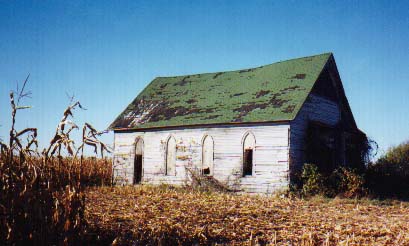
The Church in the Wildwood has always been a favorite song of mine. Perhaps this is because it harkens back to what many eulogize as a simpler time. Perhaps it is because the second verse speaking of the clear ringing bells reminds me of my own home church. Yet, let us not be in delusion, the days of the church in the Wildwood are far gone. Rural churches are no longer able to press on in seclusion or stale tradition as they were in eras past. Today, the rural church is in the midst of a half century decline of both numbers and spiritual vitality. Where does the restoration begin? Consider my broad but flexible suggestions...


1) Rural Church revival must be coupled with rural economic revival.
This is a task that is certainly easier said than done. Yet, churches in small towns or rural areas should not be afraid to be thoughtful voices in the community for economic growth. Smart zoning and rural development, small farm subsidies, conservation, tax concerns, and rural education are all areas that require advocacy and attention. (Maybe not from the pastor directly, but rural church members should be heartily encouraged on these issues.)http://www.pcusa.org/rural/ is a good website to visit for more on this.

2)The rural church must embrace the best of its identity.
a) This means utilizing the highly relational nature of rural congregations. The small country church is much more likely to have the feel of a large family. Church's should nurture this strength and use it to the best of the ability. In rural society church is one of the few places you can "belong".
b) The rural church cannot be afraid of traditional worship or even worship with a more "country" or "gospel" twist. As long as worship is theologically Triunely centered and balanced and edifies the believers it is a plus. On occasion the praise choruses of megachurchdom can be fairly innefective especially in conservative areas or in areas were there are a large number of unchurched people. (ex. rural areas)
c) The rural church must also seek to intentionally develop its community voice and presence by fearlessly speaking out on community issues or beginning a community mission of some sort.
3) The rural church must readily reject the worst of its identity.
a) The rural church must seek intentional diversity with new or isolated people groups. In much of the midwest this means having a Hispanic outreach ministry or begining a Spanish-language worship service. (Of course, this implies the willingness and resources to bring a Latino(a) pastor on staff.) At any rate, many of the cities, towns, and rural areas of the upper Wabash Valley have Hispanic populations ranging from 8%-30% and all are rising.
b) The rural church must discard its closed nature. One of the pitfalls of being a family is exclusivity. This is a cloak the rural church must shed or it is doomed.
c) The rural church must be Bible based. Too often the devil sneaks in under the guise of "common sense", cultural wisdom, and "how we've always done things".
Coming Soon... The Conclusion to the Road to Rural Revival series.

Friday, January 26, 2007

The Need for Rural Revival

For a long time now the need for a revival in the rural church has been a keenly felt need. For nearly a half century the small town churches and rural houses of worship have slid in a slow and steady decline. I can remember visiting the Romney, Indiana United Methodist Church on one occasion. 80 years earlier it had been built to hold 300 on Sunday morning. Now about 70 meet there. The building remains a beautiful and elegant monument to what once once. What Longfellow noted of Evaneline's village of Grand Pre' remains true in many small towns and agrarian areas, "Nought but tradition remains." Of course, the general decline of many small town economies and the Midwestern economy in general is to blame for sure. The low commodity prices of the last 75 years forced many off the land who might be sitting in those rural pews otherwise. Also to be blamed no doubt is the increased mobility of our society. In the 1950's a round trip to church of 50 miles would have been unthinkable. Today, however, many make the drive the nearest urban or suburban center to the sprawling grounds of the hottest church at the moment; leaving the country parson to beg for parishioners. To be sure, there are no shortage of reasons that our once vibrant rural churches have morphed into monuments of eras bygone.

Despite all of this there is definite reason to preserve the many small rural churches we currently maintain. Perhaps the greatest of these reasons is the simple fact that many of these churches, though they may be small, still exercise a sizable amount of influence and voice in their communities. These churches, whatever their effectiveness in measurable terms for the kingdom, remain places of meeting, community centers, and voices for the kingdom in communities that might otherwise lack such a voice. Of course, not all of the small rural churches currently operating take advantage of these benefits. Yet in every small rural church there is the potential to stand as a serious contender in the affairs of the community. A small church in a small town can have the unique ability to call the entire town to revival, reconciliation, and justice. In a small town the entire area is the parish of the church. People who have always lived near the church consider it their spiritual home even though they never attend.

To be sure, there is no shortage of need in small rural communities for the gospel of Jesus Christ. The Glenmary Research Center in Atlanta, Georgia has found that as many as 40% of the rural population in the United States is unchurched. These numbers are born out even more significantly in Indiana and the general Midwest. A 1991 nationally operated survey of religious adherents county by county revealed that in many counties in rural Indiana the situation is far worse. Fulton County, Indiana, for example, claimed only 42% of its population to regularly attend a religious institution. The numbers were not much improved in many of the counties that comprise of the Wabash Valley, once a cradle for the Methodist and Wesleyan traditions in the Midwestern United States. Definitely, there is a need! There is a need for salvation in many of these rural communities. There is the need for a voice of the church in many of these communities. Quite simply, the battle is not yet won, nor is it looking like it will be won any time soon.

Why write about a topic that so few of my peers likely care about? Why set to word thoughts on a topic that District Superintendents are only forced to think of? Why raise a voice for the small town or rural church? Because we cannot forget them. Indeed they are small churches; not glamorous. Often they lack a projector screen or power point presentations for worship. They seldom sing the most recent songs blasted over Christian radio. Yet, "Whoever can be trusted with very little can also be trusted with much..."

Monday, November 06, 2006

There is a fountain...

All I choose to say this week is summed up best by this favorite old hymn penned by William Cowper. I have only adjusted the last verse to suit better my own theological bent and tastes. If I had to post the same blog every week it would be this one. To know me, this is all you must really know.


There is a fountain filled with blood drawn from Emmanuel’s veins;
And sinners plunged beneath that flood lose all their guilty stains.
Lose all their guilty stains, lose all their guilty stains;
And sinners plunged beneath that flood lose all their guilty stains.

The dying thief rejoiced to see that fountain in his day;
And there have I, though vile as he, washed all my sins away.
Washed all my sins away, washed all my sins away;
And there have I, though vile as he, washed all my sins away.

E’er since, by faith, I saw the stream Thy flowing wounds supply,
Redeeming love has been my theme, and shall be till I die!
And shall be till I die, and shall be till I die;
Redeeming love has been my theme, and shall be till I die!

When on that yonder shore I stand, beyond the Jordan's waves,
Then in a nobler sweeter song, I'll sing Thy pow'r to save!
I'll sing Thy pow'r to save! I'll sing Thy power to save!
Then in a nobler, sweeter song I'll sing Thy pow'r to save!

Friday, October 27, 2006

Jesus Christ: Not the Family Values Candidate

The Bible I most often preach out of was my father's. It was the Bible he received upon high school graduation. It was the same Bible he carried throughout my childhood. If I imagine my father with a Bible in his hand it is that brown leathered covered Bible I see. Sure it may be the King James Version, but that is what the people of my church read so it works well for preaching there. There is just something special about that Bible. Perhaps its so special because to me it represents that faith of his which I was taught and eventually accepted, the faith of my family.
When most people yield their lives to Christ they seldom consider the impact this decision will have on their families. How could they? When we first step forward in faith to accept the offered cup of the sacrifice of Christ our spiritual eyes are still milky with the dew of ignorance and inexperience in the faith. As time wears on however most people begin to gain a sense of how disastrous Jesus Christ will be to their life and the world they once knew. To be sure, a true relationship with the living Jesus Christ demands that a life be turned upside down. How we play church, how we labor, how we govern, and how we relate to those closiest to us can never be the same.
Jesus himself predicted this course of events in Luke 12:49-53 when he said, "I have come to bring fire on the earth, and how I wish it were already kindled! But I have a baptism to undergo, and how distressed I am until it is completed! Do you think I came to bring peace on earth? No, I tell you, but division. From now on there will be five in one family divided against each other, three against two and two against three. They will be divided, father against son and son against father, mother against daughter and daughter against mother, mother-in-law against daughter-in-law and daughter-in-law against mother-in-law" (NIV). In so many words, "I am not the Messiah of family values."
Many can testify to exactly what Jesus meant when he made this bold statement. When you follow Christ that sometimes means you will find yourself at odds with your parents or siblings, especially if they are non-believers. Jesus did not come to preach warm and fuzzy family values, but to preach justice, redemption, mercy, freedom,love, and the truth of God in eternal life. His yoke is light and his burden easy, but his teaching is hard to take. As a result, families cannot always be united in his service. As a result mother can sometimes be turned against daughter and father against son.
However, the challange of outright division is not the only one that faces the family. In Luke 9 (verses 57-62) Jesus describes what it takes to be fit for service to the Kingdom of God. He calls a man to follow him. The man seems willing but requests to first be allowed to bury his father. Jesus rejects this as an excuse responding, "Let the dead bury their own dead, but you go and proclaim the kingdom of God." On occasion, Christ calls men and women to proclaim the gospel and leave their family behind. (Let me be clear, when I speak of the "family" I do not mean a spouse or children, but parents and siblings.)

Jesus even finds himself caught between family and the proclamation of the gospel. Luke writes of the incident: "Now Jesus' mother and brothers came to see him, but they were not able to get near him because of the crowd. Someone told him, 'Your mother and brothers are standing outside, wanting to see you.'
He replied, 'My mother and brothers are those who hear God's word and put it into practice'"
(Luke 8:19-21) Jesus eventually puts a sharp point on the whole issue when he declares in Luke 14:26, "If anyone comes to me and does not hate his father and mother, his wife and children, his brothers and sisters—yes, even his own life—he cannot be my disciple." To be sure, a committment to Jesus Christ must come first.
Anyone who has ever been involved in ministry knows that the choice to choose between family and Christ comes sooner or later. It normally comes first when a minister to be chooses a spouse. Their choice must be ready and willing to share the call to proclaim the message. The choice appears again as difficulty arises in planning holiday meetings. Christmas and Easter conjure up headaches not warm sentimentalities as the Church calander conflicts with family gatherings. Children challenge the call in a unique way. The only hope for a minister with children is that he or she be as good a minister at home as they are to the church. Again and again we must choose. However, for those of us who have been there the right choice is obvious, though it may be difficult to accept. Our love and service to Christ and his Kingdom must come first.
Luckily, thus far my family has understood and supported our ministry. Praise be to the Lord, I don't forsee that changing. I should mention that when a family proclaims the gospel together, carries the cross together, and yeilds all together, it flourishes. In the mean time my wife and I will continue to tell the story of the faith my family holds. All the while, I'll continue to preach out of the old rugged Bible that was once my Dad's.

Tuesday, October 17, 2006

I yield... I yield...

For the past months I have increasingly struggled with the ideas of sanctification. I understood them well, or so I thought. I liked where they point us theologically. I thought they were well rooted in scripture. I knew that I was partially sancitified, or wed unto Christ or circumcised of heart (whatever terminology you prefer), but I longed for a more complete more full sanctification unto the GOd I love so dearly. I began praying for this more and more. However, it seemed the more I prayed the more I felt distant from that goal. I tried to be holy, to pour more of myself out to my wife and my church, to serve more, to pray more. It didn't work.
During my Romans and Galatians class taught by Dr. Ken Schenck Romans 1:16-17 began to speak to me. So I decided I would preach on it. I did my word studies. I read three or four of the best commentaries. I spent time in prayer. I gave it all time to percolate. As I began to put all of the pieces of the message together I realized this: I don't get any closer to God on the basis of what I do. I don't always even gain ground on the basis of what I seek from him.
Romans 1:16-17 states roughly, "I am not ashamed of the gospel for it is the power of God for the salvation of all who believe. First to the JEw and then to the Greek. For a righteousness of God is revealed from Heaven from faith to faith. For as it is written, 'The righteous will live by faith."
John Wesley would have argued that this "righteousness from God was given at first to us when we first believed and then that God goes on, in our faith, to make us actually righteous. PErfecting over time. (Forgive me if this is an elementary understanding of Wesley.) Anyway, what do I take from this? What did I get?
I got this: God makes me holy by my faith in Christ. I don't need to seek holiness as an end. I don't need to do things to become holy. I need to trust Christ to make me holy. Those things "holy people" do come as a biprduct of that trust and faith in Christ that grows deeper as the days role by. John Wesley summed it up this way in a brief hymn. (from www.ccel.org)

NOW, even now, I yield, I yield,
With all my sins to part;
Jesus, speak my pardon sealed,
And purify my heart;
Purge the love of sin away,
Then I into nothing fall;
Then I see the perfect day,
And Christ is all in all.

Jesus, now our hearts inspire
With that pure love of thine;
Kindle now the heavenly fire,
To brighten and refine;
Purify our faith like gold,
All the dross of sin remove;
Melt our spirits down,
and mouldInto thy perfect love.

I yield... I yield...

While I emphasize sanctification as a process of submission to Christ let me also not too emphatically assert that I believe it can take place in a single moment too. Although I think that this moment of which many testify is simply the moment they realized all they needed to do was to yield... to yield...

I'll admit that to some of you who might read this, this blog seems like pretty elementary stuff. I agree, it is. What I'm bloggin about is something I've known in my brain for a long time. It is something though, I confess, I am just now learning in my heart. and I yield... I yield...

Friday, October 06, 2006

Required Reading for Pastors and Leaders

I found myself amused recently during a class in which Rev. Paul Hontz (of Holland Central Wesleyan) was the guest speaker. Throughout the course of the class period he named at least two books which should be read by every pastor. One of them he noted was an absolute must read. (I agreed with him on this; it was In the Name of Jesus by Henri Nouwen.) That got me thinking though of all of the books that pastors and other leaders should be reading. In light of that I have a suggestion.
The recent work of Doris Kearns Goodwin, Team of Rivals, should be a required text for anyone planning to to lead anyone anywhere. Goodwin does a masterful job of showing what true leadership is through the historical lense of the life and experiences of Abraham Lincoln. What Goodwin highlights as Lincoln's most imoportant trait, however, is a trait that has only recently entered the American leadership lexicon and has yet to be integrated into church leadership: emotional intelligence.

"Exactly what is Emotional Intelligence? The term encompasses the following five characteristics and abilities:
Self-awareness--knowing your emotions, recognizing feelings as they occur, and discriminating between them
Mood management--handling feelings so they're relevant to the current situation and you react appropriately
Self-motivation--"gathering up" your feelings and directing yourself towards a goal, despite self-doubt, inertia, and impulsiveness
Empathy--recognizing feelings in others and tuning into their verbal and nonverbal cues
Managing relationships--handling interpersonal interaction, conflict resolution, and negotiations" (taken from http://www.funderstanding.com/eq.cfm)

Lincoln, according to Kearns Goodwin, was the master of these traits, especially in the areas of empathy and relationship management. Now I recognize fully that a book like this will never be required reading for a church leadership class, but the subject of emotional intelligence may not be a bad subject to touch on. I also recognize that Lincoln's leadership was not specificly a Christian style, though it was certainly rooted in the prevailing protestant culture of his day. No matter what I still reccommend the book as one of the very best I've read in a very long time. Read it.

Thursday, May 18, 2006

Summer Reading List

I thought some might like to see my summer reading list. Note that this is only a partial list, and includes some already completed reading.

The Complete Works of Josephus Completed

Written by the 1st century Jewish history, this is considered the go to reference for anyone researching the Jewish antiquities or 1st century history. I mainly skimmed this; it is heavily recap of the Bible, and lacks the divine inspiration.

To Kill a Mockingbird Completed
A classic recommended by Amy. I thought it was good, but not as good as the cover promised. Also, for me, the ending was a let down.

Fahrenheit 451 Completed

A Ray Bradbury novel, and another Amy pick, this is fiction at its finest. Although the fiction at times seems a little to near to real life for comfort. The novel is about a futuristic man whose job it is to burn books so that they wont be read. The logic is that books are too offensive, and we just want everyone to be happy, so just keep them watching TV. My TV viewing has dropped drastically since reading this. An incredible book.

The Mighty and The Almighty Completed

The book I'm currently reading, written by former Sec. Of State Madeline Albright, is a conversation about the role of faith and religion in world politics. The purpose of the book is a bit muddy, and the only suggestion to any world conflict she seems to have is to "use religious leaders to facilitate and legitimacy diplomatic negotiations." It is still a good informative read, despite the sneaking suspicion I have that it was written by committee.

Being God's Friend Partially Complete
A book by Charles Spurgeon, and a gift from Papa. I can't wait to read it. I have already read the first chapter and it seems to me a book everyone should reread monthly. I have also read "Quiet Times with Charles Spurgeon", a devotional book, and it was chalked full of striking Spurgeon quotes on every page. Spurgeon, agree or not, makes you think, and does have a way with wording the gospel.

A Consistant Ethic of Life Complete

An assortment of speeches and addresses made by the late Cardinal Joseph Bernardin, who was at one time the Archbishop of Chicago. The book addresses how Christians must develope a consistent ethic of life in the political and personal arena. In other words if the abolition of abortion is important to us thatn the cesation of warfare, a moratorium on the death penalty, and caombating hunger and disease should also be key values, for they are woven together into the "seamless garment of human life"

The Promise of Peace Complete

Another Cardinal Bernardin book, this one about Christian oppostition to warfare. I'm very interested in Catholic writing right now. They are far and away ahead of us in the area of social justice, and we would be wise to look to their beliefs in the political arena.

The Gospels

Amy and I will be reading them together.

Anything relating to Romans & Galatians

I have a Dr. Schenck Class on this subject this fall, I just want to be ready.

Much Much more....

I'll probably read ten more books than this even. However, this is all I'm sure of for now. If you have any suggestions let me know.

Wednesday, April 26, 2006

Ishmael's Cry: A Call for Cross-Cultural Compassion

The Text
I was reading recently in Genesis 20 and came across a verse that touched me profoundly. The account of Genesis 20 is one known by many but studied by few; that of the birth of Isaac.
We are told that after Issac was born that Sarah, the wife of Abraham, demanded that her maidservant, Hagar, and the child born of her husband by this servant, Ishmael, be sent away.
The author of Genesis goes on to tell us that although this troubled Abraham greatly he went ahead and sent Ishmael and Hagar away. We are told he did this because God said, "Do not be so distressed about the boy and your maidservant. Listen to whatever Sarah tells you, because it is through Isaac that your offspring will be reckoned. I will make the son of the maidservant into a nation also, because he is your offspring." (v. 12& 13)
So Abraham sends his child and the child's mother out into the desert. Eventually, however, their provisions run out. They use up all their water. Hope is lost. Hagar sets the 14 year old Ishmael down in the shade and walks away, unable to watch the inevitable death of her son, who would undoubtably soon succomb to the desert heat without water.
It is this part of the passage, then, that intruiged me. The New Living Translation tells us, "Then God heard the boy's cries, and the angel of God called to Hagar from the sky, "Hagar, what's wrong? Do not be afraid! God has heard the boy's cries from the place where you laid him. Go to him and comfort him, for I will make a great nation from his descendants."
The Big Deal
"God heard Ishmael cry". God hears the cries of the oppresse. Very significantly, he is not deaf to those outside his plans or kingdom. Ishmael went on to be a great nation, and he is commonly considered in Biblical and Qu'ran sources to be the father of the Arab peoples.
Why does this matter? It matters because the American church has a tendancy to believe that only we Americans pray to God, and that God hears only our prayers here in America. If God heard Ishmael's cry then who is to say that he will not hear the cry of Ishmael today? Millions of the descendants of Ishmael are crying out now.
It certainly is not a subject we like to think about, but in truth we must. Arabs all over the Middle East are crying out today. They are oppressed by tyranical governments, women are treated like animals under much of the strict Muslim law, the wealth of their nations is robbed out from under the people by their rulers, and they have been convinced by their poverty and desparation to follow creeds of Islamic fundamentalism and extremism. These people cry out to God for deliverance from their governments, our government, the Israelis, the desert, the heat, the poverty, and the percieved pillaging of their culture. Their cries are being raised to God.
Conclusion
Don't get me wrong, I do not condone acts of terror that this desperation promotes. I do not necessarily blame Israel for its acts of agression. It is a rough and cruel world. However, beware, God hears the cries of Ishmael, and so should we. God is intimately aquianted with those who descend from that Abrahamic line. He knows each of them by name. Although we may not agree with them, they too are near to God's heart. Thus they should be to ours also. God has heard Ishmael's cry. Can you?

Thursday, April 20, 2006

The Ministry That Every Church Needs

As Jimmy Hoffa once humorously stated, "I may have faults, but being wrong ain't one of them." I think from now on I will claim that line, at least on the topic of this particular blog, the ministry that every church needs.
For a semester now I have been drenched in the stuff of church growth, worship, spiritual formation, and on and on. In all this, however, I have noted one areea which even at the educational level we largely ignore. That is the area of local missions.
The Need
Let me first define what I mean by local missions: any program or organization of outreach centered, sponsered, and funded by the local church to provide a necessary service to the community. I will even be so daring as to state the following: Every church with a Sunday morning attendance of greater than fifty should have a substantive local missions program consisting of at least one major service or product contributed to the community. Among the possibilities for such programs are the following 10 starter ideas:

1. The Food Bank- One of the longest lived and most successful outreaches of many churches is the food
bank. You cannot come much closer to perfectly following the directive to "feed the
hungry" than this.
2. The Second Hand Store- The Salvation Army and Goodwill have this market cornered,
but many communities are still in need of inexpensive clothing provided
by the loving hands of the church.
3. The Transit- Your church could begin to provide a city wide transit service. Insurance would be pricy,
but charging a small fee might help offset the financial overhead. The church gets a twofer
for this one; you protect the environment and aid thos who cannot afford transportation.
4. The Community Center- A community center for Senior Citizens could be a real boon to the ministry of
any church. This normally would require a more urban setting, so the option is out for
the rural church. However, a community center for teenagers might also be a good
investment.
5. Counseling Services- Larger churches might feel comfortable launching a counseling center for a variety
of needs ranging from drgu addiction, to domestic abuse, to even psychological disorders.
If the church was too wary of the liabilities it might be better to simply subsidize visits
to another local counseling center. An effective way to do this might be by offering
financial aid to low income applicants in need of counseling.
6. Group Therapies- Alcoholics Anonymous and other support groups have always found a welcoming home
in the church. Encourage a local group to use your funds and facility.
7. Homeless Shelter- Pricy but necessary.
8. Community Redevelopement- Churches in run down or dilapidated communities might feel called to
engage in programs centering on community renewal. This could take the form of
church members fixing up community houses one by one, grants to homeowners
and businesses, or adopting areas of the community to clean and beautify.
9. Meal Ticket- A weekly or monthly free meal open to the community.
10. Preschool- Financial aid to families in need who wish to enroll their children in preschool. This can be
either in the form of a church subsidized discount in a preschool operated by the church or in
the form of a check to the preschool of choice if the church does not have a preschool program.
The Requirements
Even though these are badly needed ministries not every church should praticipate. Here are some thoughts on what churches might need to get started and remain successful in any such ministries.
A. Congregation- More than fifty regulars makes the whole process easier from every angle. With this
size congregation or larger you are beginning to have more discretionary funding
and enough members to support the required work level of launching such a ministry. To
be sure, there are more sacrifices for a small church to make.
B. Involvement- Ten percent of the congregation or more needs to be involved with any outreach local
missions ministry. Why? That way the ministry is the church's ministry and not "Ted's Program"
or "Betty's Thing". This also will encourage continuity long after the current pastor leaves. If
the congregation isn't involve it becomes much easier for the incoming minister to discard a
much needed outreach to pay for the new sound system.
C. Need- Why begin a local missions program for the homeless if you live in small town, USA? Tailor your
ministry to need. Something like a Chrisis Pregnancy Center would be a great ministry anywhere.
Just make sure someone else isn't already doing it.
D. Funding- Although this seems obvious I'd better state it or someone will leave a comment about it. If funds
are low try partnering with other local churches.
E. Revival- The church must have been recently revived by the Holy Spirit or have been on fire all along.
Spiritual maturity for both leadership and the congregation is probably the most imprtant factor in
the success of a ministry of this kind.
F. Spirit- There must be a general support from the congregation, rooted in the Holy Spirit's leading. If this does
not exist you may try and push ahead, but do so with caution. It is far better to fail to establish an
outreach for a time than to tear the church apart at its' seams trying.
Conclusion
Well, admittedly, this blog is not as moving as last weeks. To the contrary it is rooted much more deeply in the concrete. However, it is no less rooted in my heart. I firmly and passionately believe that every church needs a local missions program that encourages its members to service in the community. This is the very essence of what we as Christians are supposed to be about. Just as Jesus himself said in Matthew 5:42 "Give to the one who asks you, and do not turn away from the one who wants to borrow from you." Go forth to serve.

Friday, April 14, 2006

Home

I had a friend say to me yesterday, "I still believe in God I just can't stand the church. I think it is broken, evil, warped, etc." At least that is what he approximately said. If you're reading this you probably know the friend. (three hints: he's big, he spoiled, and he's a teddy bear 'most of the time')
Anyway, a serious of bad run ins with local churches had led him to be more than disenfranchised. He was angry. As we sat around a beautiful pick-nick table out in the sun Amy, our other friends, and I all took turns at tearing his comment apart.
Sure, everyone feels hurt by the Church from time to time. Nearly everyone has felt unnapreciated, been involved in a Church split, chewed out by a fellow church member, or wrongly judged. That is nothing new. If we refer to the Bible we see the same thing over and over again. The Apostle Paul is always counseling churches to get their acts together and love each other. He exhorts them to forget percieved slights and ignore intended wrongs. All in all, he challenges the Corinthians, Galatians, Romans, Thesselonians, and Ephesians (and more) to love each other as is the primary task of the church. To be sure, dislike or hurt towards the Church is an age old phenomenom, as old as the faith itself.
We responded with a variety of arguments about the church being the living body of Christ, perfect as a whole Catholic (universal) unit, but flawed as individuals, congregations, and denominations. This is true, but I think today there is more than even this argument in play.
This last week Keith Drury told us that he plans to walk the Pottawattamie "Trail of Death" from Twin Lakes near Plymouth to Kansas. When he told us this I proudly offered my History of Marshall County book to him for his research. As I offered it I told him proudly, "These are my people."
Later, as I thought about this statement I could not help but be moved a little bit. Truly, those are my people. From the Michigan state line down to the banks of the Wabash I know almost every road, river, stream, and field. I talk like those people, I look like those people, and although I don't always think like them I know them and love them. They are my people. Almost every member of my family lives there. The steelworkers, truck drivers, construction workers, politicians, and especially the farmers are mine. It was from them that I have come.
There is a profound pride that I carry in having this solid identitiy. There is an immeasurable beauty in knowing where you belong . It is a facet of life being lost in this age of global travel and high speed communication. Most people can no longer say proudly, "I am from ...". Most people today can no longer call some idyllic small town home. Most people do not have a place where they can run home to when the chips are down.
That, friends, is the truest and most beautiful reason for the church today. It gives us identity. It gives us family. It gives us a place to call home.

As our conversation wound down someone concluded that "it is a place to be the home of your faith." This is true, but it is also so much more.

St. Patrick often referred to his call to minister to the Irish people as his "exile for Christ". Since my call I have felt much the same way. I am currently in exile from my homeland. I visit only occassionaly. And although I am near it and seperated by only a little more than an hour my grieving somedays is deep as I long for the plainview of home. I still miss the bawling cattle the fields of wheat and the shades of green fields and trees. (Central Indiana has a lot fewer trees.)
But in the midst of it all I can still call the Church home. They too are my people. Although I will always call Norther Indiana home, the Church helps to fill the gap. True its far from perfect when you take it in small chunks like individuals or congregations, but as a whole the Church of Christ makes a more than adequate home.